Survival
Let’s talk about disaster/survival kits, more specifically mobile survival kits. Here is a scenario to consider:
You and a group of friends are out on a hike in backcountry of the mountains. One member of your group slipped and fell down a steep cliff and has received serious injuries. It is late afternoon, the weather is unseasonably cool and it is beginning to rain. Unfortunately, due to the time required to recover the injured member of your group, two additional members now have cold weather injuries ranging from mild to moderate. Your group must care for the wounded, establish a camp which provides the essentials of life, procure food and attempt to be rescued.
Survival
You and the members of your group only have what is on your person to accomplish the goals stated in the scenario. This begs the question, “What should I carry in my survival kit?”
It’s not as easy a question to answer as one might think, especially if you have never assembled a disaster/survival kit before. People who are attempting to assemble their very first disaster/survival kit often make one of two mistakes. The first mistake I call the “The Ban-Aid Approach” mistake. This mistake arises from an unrealistic assessment of the possible disaster/survival scenarios that one may find themselves in. I’m sure that you seen this type of person, when you ask to see their disaster/survival kits, they show you a flashlight and a package of band-aids. The second mistake is what I like to call “The Kitchen Sink” mistake. Remember, we are talking about mobile disaster/survival kits; the term “mobile” implies the ability to be moved. The individual who has made this mistake is easy to spot; they often look like the old fellow on the Zed Zeppelin IV cover. In an attempt to equip themselves to meet every possible disaster/survival scenario, they have packed entirely too many (and often redundant) items into their kits.
So, how do we balance being properly equipped to meet possible disaster/survival scenarios with the need of the kit to be easily portable? Let’s start by splitting mobile kits into two categories; personal kits and group kits. A personal disaster/survival kit must be able to sustain an individual for 48 to 72 hours at a minimum. The items that you stock your personal survival kit will need to provide the following: the essentials of life (fire, water, shelter), basic individual medical supplies (to include personal prescriptions), the means to signal (both near & far, day & night), the means to navigate, basic hand tools (knives, saws, multi-tool, etc), individual protection from the elements (coat, tarp or poncho), the ability to store scavenged items, basic sustenance (food or the means to obtain food). Keeping these requirements in mind, the first thing we should do is to find singular items that fill multiple requirements. For instance, a military poncho can fill the requirements for shelter and individual protection from the elements. The second thing we should consider is the size/weight of each of the items that we stock in our kits. If you want to keep your kits highly portable, may wish to select a collapsible hydration pouch and water purification tablets over a canteen and water purification pump. Lastly, we should consider the re-usability of the items in our kit. To put it more simply, whenever possible, avoid stocking you kits with items that can be used only once. If “one use” items must be stocked in your kit, be sure that they are small and light weight (i.e. water purification tablets).
Now let’s talk about group disaster/survival kits. Group kits must be able to sustain 2 or more individuals for 72 or more hours while still being reasonably portable. The items that you stock in your group kit will be similar to the items in your personal survival kit with the difference being in the amount, size and weight of the items. Don’t get me wrong, size and weight considerations are still important…….remember this is still a mobile kit! Your group disaster/survival kit will contain: additional means to provide fire & water, enhanced shelter building supplies (tarps, cordage, stakes), water treatment & storage capabilities (filters, chemicals, large collapsible containers), advanced medical supplies (curative medications, additional prescriptions, minor surgical instruments), larger hand tools (Hachette, machete, folding shovel), additional food supplies or food gathering tools (fishing gear, sling shot, small caliber firearm). Ideally, a group disaster/survival kit should fit entirely in to a large back pack. However, if need be, it can be stored a variety of containers and then distributed amongst the members of the group to transport. The idea of re-usability still applies to group kits; in fact it is actually a bit more critical. A group kit has to support greater number of people for longer periods of time. This will naturally cause your group kit to be larger and heavier, to minimize the ever growing survival kit, you should eliminate single use items as much possible when stocking your group kit.
Ok, now that you’re armed with all this valuable knowledge, you want to run right out to get your disaster/survival kit together. But which one should you assemble first? Simple, cover your own butt first, then look to help others. In other words, build your personal disaster/survival kit first, become an expect with everything in it, refine your survival kit a few times THEN build a group kit. The lessons that you learned while assembling (and practicing with) your personal kit will be of immense value when you assemble your group disaster/survival kit. You may also find that some of your “would like to haves” from your personal kit that where force out by your “must haves” can go into your group kit.
Well, now you have a great excuse to go gear shopping! No need to thank me, just don’t let it go to waste…….
Instructor William Green
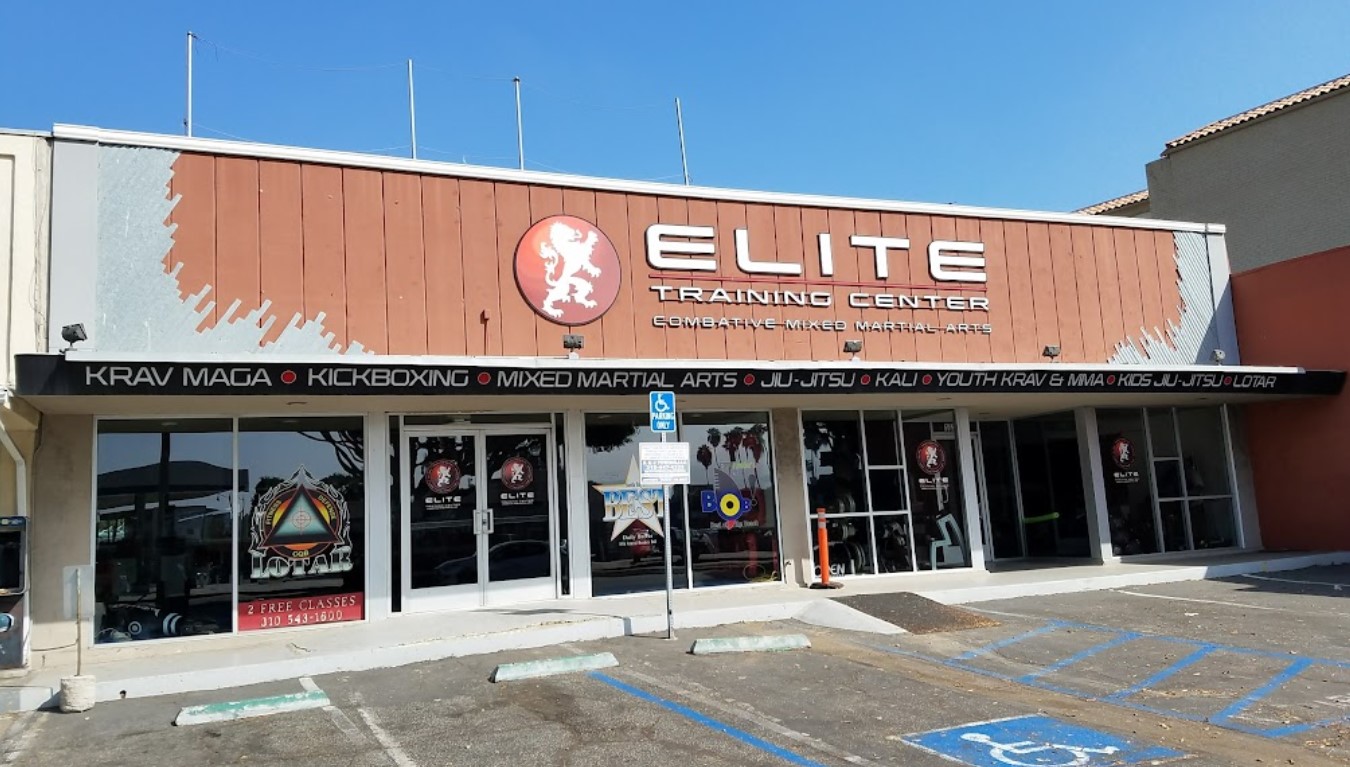
Elite Training Center
1628 South Pacific Coast Highway
Redondo Beach, CA 90277
(310) 543-1600
www.elitetrainingcenter.net
Survival