Brazilian Jiu-Jitsu (BJJ) is an amazing martial art. It is a grappling oriented style with proficiency on ground fighting. Since its beginning in the early part of the 20th century, Brazilian Jiu-Jitsu was developed from real fighting situations – whether standing up or on the ground. In that regard, the style was based on what is real instead of what “could be” real. In both traditional BJJ and Women’s BJJ, training and learning emphasized this philosophy, creating techniques that effectively addressed the actual tactics and strategies of a real fight using practical movements instead of flashy and theatrical nonsense.
The goal of Brazilian Jiu-Jitsu is to bring an opponent to the ground, and rely on grappling techniques to subdue the opponent using holds, arm-locks, chokes, leg-locks and strikes. This strategy takes away the advantage of an opponent with superior striking abilities. It can also mitigate the advantage of a stronger and much larger opponent by relying on wrestling or grappling.
Brazilian Jiu-Jitsu has always been marketed as the martial art for the smaller man or woman, as the individual trains with the idea that the opponent is bigger, stronger and faster. By using technique, strategy, and self-controlled-timing instead of strength, the smaller person will win positions, the little battles and force the larger opponent to lose endurance, thus making a mistake to ultimately lose the contest. This is the advantage of Brazilian Jiu-Jitsu.
With a little bit of knowledge, anyone can be more effective in self-defense, no matter their build. One does not need to be of a smaller body frame and promoters of the art have not needed a marketing strategy developed since the turn of the century. However, I like it anyway!
Training in Brazilian Jiu-Jitsu
When I started Brazilian Jiu-Jitsu in 1995, Gracie Jiu-Jitsu, Grappling and Submission Fighting tournaments were non-existent on the east coast of the United States and the Philadelphia area. The only event at the time was the second annual Gracie Jiu-Jitsu East Coast Championships, which I competed in. Our academy was the first one in Pennsylvania under Steve Maxwell, Relson Gracie’s first American-promoted Black Belt, with an average of 20 to 40 students in all classes. It was a different time, but it was amazing because of Royce Gracie’s success in Ultimate Fighting Championship (UFC) 1, 2, 3 and 4. Gracie Jiu-Jitsu had exploded all over the world and caught every other system with its pants down: No one knew how to fight in the clinch or on the ground!
Martial artists were trying to learn Brazilian Jiu-Jitsu overnight, but there was nowhere to learn in the United States if you did not live in Los Angeles, San Diego, Hawaii, Philadelphia Pennsylvania or Red Bank New Jersey. Training methods would also change overnight. By UFC 5, everyone was “Cross Training.” Brazilian Jiu-Jitsu and its training methods helped give fighters and coaches better methodologies to practice fighting techniques and strategize for the UFC, Japan Vale Tudo, and other events around the world. Self-defense training also became more effective when incorporated with BJJ.
Vale Tudo (Anything Goes) is from Brazil, made popular between 1930 and 1990 by no-holds-barred very limited rules fighting contests. Rorion Gracie (Co-Founder of the UFC) modeled the 1st UFC in 1993 after Vale Tudo matches! The Gracie Family & other jiu-jitsu fighters from Brazil were 65 years ahead of the early MMA promotions outside of Brazil in the early 1990′s.
I want to make the point again because this gets lost with time and the training strategies do not get enough credit: Brazilian Jiu-Jitsu helped change Training Methodologies. Before the UFC, Martial Artists were practicing Katas, Forms, punching the air, wrestling for pins, training the perfect throw, kicking for points or breaking boards. Vale Tudo (Anything Goes) training from Brazil helped redefine how to train more effectively for the UFC and in the martial arts school. I was able to witness it firsthand.
The Brazilians deserved all the credit because the new Training Methodologies were a fresh start and a welcome change. Clinch work and ground fighting techniques & strategies then were refined for street fighting. Hence, the revolution came at the right time. If you were against the movement, you missed out on tremendous growth potential as a martial artist!
When I started at Maxercise Sports & Fitness, it did not have a lot of female students. We had maybe 7 or 8 women overall. During the in-house tournaments and regional tournaments in the late 1990’s, our female competitors competed against a female from a different BJJ team. Around 1999, our academy had gained more experience in both national and international events such as the Gracie Jiu-Jitsu Nationals, the Hawaiian Internationals and the Pan Ams. We were ready for the World Championships (Campeonato Mundial) in Rio de Janeiro, Brazil. When our team arrived in Brazil for the Mundials, there was a female division. However, all of the belt levels were mixed and combined. For example, blue belt had to compete against a brown belt or a black belt. This format did not change until a few years ago.
When I was 17, there were female students on the jiu-jitsu team that wanted to compete against the men. All of the instructors and most of the male members on the team were against this idea. At first I was against it also, because everyone else was saying no. Then I asked the girls on the team if they really wanted to do this. They told me, “Tony, we train hard physically, mentally, emotionally, and give just as much to this spiritually as the boys!” I was sold after that and went on to promote for them. I took a lot of heat from my instructors and the boys of the team. I was told in Brazil that the women do not complete against the men. I was given many reasons why this shouldn’t happen. After all the arguments, all I had to say was that the girls wanted to compete and there were no women at the tournaments, so give the women a chance to fight the boys!
Fast forward 18 years: The UFC today has a female division for professional Mixed Martial Arts. Women from Brazil will be making their way to the big show soon to dominate all the divisions in the UFC. In jiu-jitsu academies, there are more and more special events, seminars and classes for women only. I recently was looking for a place to train jiu-jitsu on a Tuesday night in Brazil. When I found the academy on the street, I was told I could not join the class because it was for females only. I left with a big smile on my face! I was proud that the sport had evolved to include and reach out to more women, opening the doors to women’s BJJ.
Problems Then & Now with Women’s BJJ
The problems that women faced and currently face in the martial art of Brazilian Jiu-Jitsu is the belief that women belong in the kitchen and not on the mats. Both the Gracie family and other BJJ academies have promoted this antiquated ideal. If women wanted to learn jiu-jitsu, they should only learn self-defense techniques and that would be enough. However, times have changed!
I read recently that one of the reasons women do not come to classes in Brazilian Jiu-Jitsu is because the sport is too tough for them. The writer and instructor, Keith Owen, even mentioned that women objectified get pregnant! I thought that both reasons, among others, were narrow in scope and insensitive. Later, I watched a video of this instructor explaining his thought process, mentioning he was told to be provocative, stating the classic, “They [the experts] say to write provocatively.” In another section in the blog post, Keith Owen stated that he is too busy to have a female-only class or that the numbers are just not there to start one. He argued for women’s BJJ, although throughout the blog post there was an undertone that he was not. There was a confusing message and a difficult topic with no one single answer. That is why Keith took a lot of heat and needed a follow-up video to explain his position. The other undertone of the blog reads of being frustrated with Brazilian Jiu-Jitsu’s limitations and stresses discussed above in academies, bringing the instructor a lot of attention.
Now, my thoughts on tough female classes and others points related to women: First, business is the art and science of providing uniquely attractive opportunities for other people, so why not have a female-only class? Second, in Brazilian Jiu-Jitsu you do not have to be tough to earn a purple belt. To be tough is subjective. This instructor said that to reach purple belt (the 3rdAdult Belt in the System & Professional Level Ranking), a student needs to be tough and submit other people. This is just not the case. Achieving a higher ranking is a journey about always improving, not just about submitting one’s opponent.
Personally, I did not submit any one of my training partners for close to a full year of Brazilian Jiu-Jitsu training. I was a white belt and remember the moment I submitted my first training partner. As a blue belt, I weighed 139 lbs and was 16 years old. Was I a tough kid? Not really! I wanted to learn and reach blue belt. Back then it was a very big deal! I loved jiu-jitsu and wanted to learn everything about it. I wanted to be technical. I wanted to learn all the little details of the art. I wanted to see my friends. I did everything I could to make it to the academy to take lessons.
Female Inclusion in Brazilian Jiu-Jitsu
If you want to gain rank in jiu-jitsu, you have to be passionate about reaching your goals. You have to showcase the techniques and strategies, and perform to the best of your abilities within your academy’s curriculum and standards. You should be a good person and represent your team. If you want to compete, then you should compete, but this should not be the only evaluation for higher ranking. If you are a woman and want to start a family, jiu-jitsu will always be there when you are ready to return to the mats. Maybe eventually, your sons or daughters will join you on the mats too!
Where do we go from here? Well, more and more females are reaching black belt in Women’s BJJ everyday around the world. There are higher level female students and instructors that want to have female-only classes in their academies. In international competitions such as the Pan Ams and World Championships, women have full team training sessions for weeks before these events, and black belts compete against black belts. There are women-only instructional camps and other special events with non-profit organizations that help bring awareness on the topic of violence against women and other causes.
On a negative note: What we do not need is marketing or products sold in the industry based on a woman’s sex appeal. There are more and more MMA organizations that are putting out how-to or educational videos about jiu-jitsu with women in bikinis. The undertone is pornographic and has no place in Women’s BJJ, our respected art form that changes lives! While I am on the topic of fine lines not to cross, if you are a professor of jiu-jitsu, you need to maintain a respectful relationship with your students. If you take advantage of your teacher-student relationships, you need to rethink your goals as a professor of the art of jiu-jitsu! Actions of mind control, sexual abuse and/or cult-like behavior have recently been highlighted out of a single jiu-jitsu academy in Maryland, and it has been a hot topic of discussion in Internet forums, social media and academies. All of this behavior has been showcased to fail. The jiu-jitsu community is tight and we police ourselves. This jiu-jitsu team from Maryland and its professor did not fall because of hate. It fell at this time because it needed to! We all move forward from here including all members of our community that did wrong or were wronged. It is a new day!
Future of Women’s BJJ Inclusion Model
What I think is needed right now is for all male practitioners and instructors to think about all members on the team. They have to put themselves in the situation I was in when I was 17 years old and think for the greater good of the sport. If you see a problem that can be solved, help solve it. Problem-solving is what you do in jiu-jitsu, so this should not be too hard. If you are a woman on a team that will not advocate for you, then you need to advocate for yourself! Sometimes, your team is not in the academy or on the mats.
Gracie Magazine, Tatami Magazine and others: We need more press in your productions. Sponsors for women in Women’s BJJ: Yes, we need it. We need to have professors teach jiu-jitsu with passion and let more students fall in love with this art. From there, they will change their lives through jiu-jitsu!
Finally, we need more time and advocate for all people in the art as old ideas change or die out for good. The challenge that instructors will continue to face is how to apply better teaching strategies for inclusion for all types of people. Inclusion creates better learning environments and better tolerances for all students. We in the community will continue to think that our generation was tougher, more skilled in the fundamentals, or the belts meant more. However, ten years from now, I am going to be part of the movement that helps make sure that this performance-based Brazilian Jiu-Jitsu will still have the reputation that a BJJ-Black Belt means something compared to all the others. Nonetheless, I hope you read that I am fighting for so much more these days. And who knows, the little girl reading this right now will be better off tomorrow by starting Women’s BJJ today!
My best,
Prof. Tony Pacenski
2nd Degree Black Belt
BJJ Revolution Team
_______________________________________
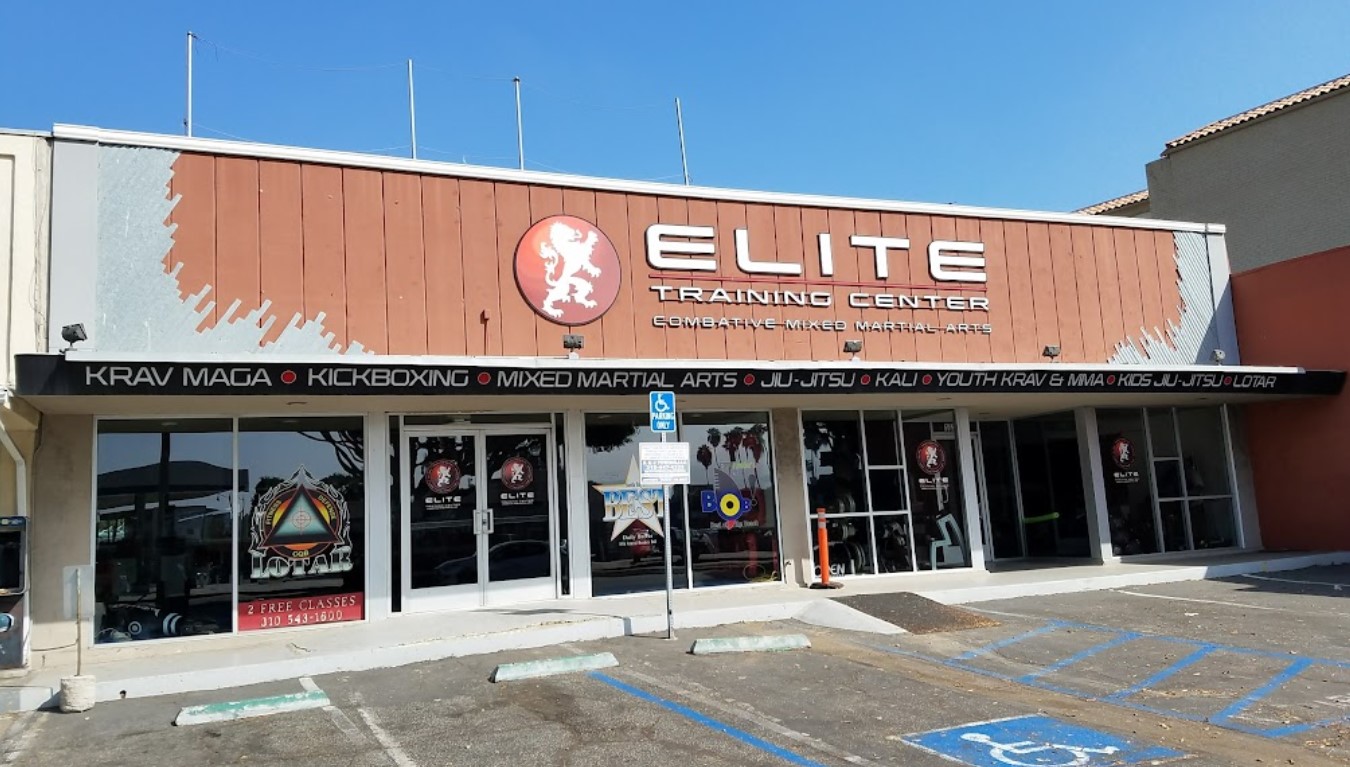
Elite Training Center
1628 South Pacific Coast Highway,
Redondo Beach, CA 90277
(310) 543-1600
www.elitetrainingcenter.net
_______________________________________
Women Tough Enough for Brazilian Jiu-Jitsu – Home of the BJJ Revolution Team