Brazilian Jiu-Jitsu Finding and Sharing A Child’s Favorite Toy
By Prof. Tony Pacenski
When was the first time you ever heard about the Martial Art of Brazilian Jiu-Jitsu? For many of us the name of Royce Gracie and the event The Ultimate Fighting Champion was the first demonstration in wanting to learn and understand Jiu-Jitsu from Brazil for the common Joe. As a result from the period of 1993 until 1995, the Martial Art industry changed so much with this new style of Jiu-Jitsu. Many people new to the Martial Arts desired to learn, but it seemed there was nowhere to go to find real Brazilian Jiu-Jitsu instruction in the United States. For the most part, all of the quality Brazilian instructors lived on the West Coast of California. It was difficult if you lived 3000 miles away from the nearest Gracie. Out of the demands for instruction, more and more Brazilian instructors moved to the United States to help build training associations developed by most noticeably the Gracies and Machado Brothers. Along with these new training associations, all the popular self-defense magazines from Blackbelt magazine to Inside Kung Fu were floated with Brazilian Jiu-Jitsu instructional videotapes helping to spread Jiu-Jitsu all over the world.
Today by using the Internet it is very easy to learn about and keep up-to-date with the new inquiries in the Brazilian Jiu-Jitsu community. Moreover, times have changed in the world of Brazilian Jiu-Jitsu and the sport of Mixed Martial Arts. New stars have shined without the last name of Gracie. These new competitors continue to inspire and motivate new students to train and win future competitions. The industry agrees as a whole that the Gracies helped point out the missing aspects of Martial Arts training and instruction by adding grappling and groundfighting. More so, the style of Brazilian Jiu-Jitsu working within the sport of Mixed Martial Arts let people understand a vision of bring in a real fight. I find it difficult to write everything that has happened over the span of ten years. Jiu-Jitsu from Brazil has spread all over the world because people like that of a kid discover how much the training can be like a toy to play with and show your friends. I always wanted to give credit to some of the instructors that inspired me and really helped Jiu-Jitsu to grow in the early days until today. One person that fulfills these requirements is Luis Fernando Heredia.
I first met Luis Fernando Heredia at the 1998 Copa Pacifica Jiu-Jitsu Championships in California. He was the referee for one of the matches that I lost as a blue belt. Luis came up to me and picked my spirits up when he mentioned how important it was to step onto the mat and test oneself in competitions like Jiu-Jitsu. Luis said, “All other people can say nothing to you because you are the one doing it and experiencing it.” Those thoughts stuck with me five years later after interviewing “Limao”(nickname) by telephone. Luis was always someone I wanted to talk with and understand jiu-jitsu better from. What I got was outside of any questions I could think of to ask. We discussed the road to black belt under Rickson Gracie, his philosophies about teaching and inferring Jiu-Jitsu to new students, and life on the islands of Hawaii. It is with great pleasure to introduce a man that takes little credit for spreading Brazilian Jiu-Jitsu in this country and around the world! Luis thank you…
Luis jumped into the interview in a relaxed tone of voice, which led on throughout. In the past I read interviews about how Luis was so much into nutrition, health, surfing and discussing Rickson Gracie. Here was my chance to learn from a person that spent so much time with the Gracies that Jiu-Jitsu was in his blood by company. Therefore, the topic of Rickson naturally presented itself in how Luis learned to be a teacher of Jiu-Jitsu. Luis took thirteen years to reach black, but during his purple and brown belt days teaching in Los Angeles was where he developed his formula of teaching new students guided by Rickson. What he discussed was how jiu-jitsu will continue to change with new techniques and strategies, but the formula of teaching people about base or balance, weight distribution, timing, sensitivity and having vision in a fight are concepts that will never disappear.
I wanted to ask Luis so much about what was the formula that Rickson taught him, yet as Luis spoke about teaching Jiu-Jitsu with love, care for his students in being technical verse tough, and having respect; the formula seemed to be already mentioned and something that is so personal to everyone as a teacher; yet, at the same time, it was a way with philosophical principles underlining it.
Luis went on to discuss how much further he wishes go to be the best teacher and instructor he can be, and how much faster students are learning jiu-jitsu nowadays with the new techniques and strategies being developed. I respected that too. In the world of universities and academics, a master’s degree is former to the doctorate degree. Here the martial arts instructor needs to be motivated and find ones own answers to teaching the better lesson, but the results in seeing a weak man find self-esteem to stand confident as he should is Luis’ approach to seeing through this inquiry.
In these thoughts of teaching and learning as Luis spoke, I presented the point of view of being technical and smooth verse competing in competitions based on strength and conditioning. My view was that competitions contradict the principles of jiu-jitsu that are found on timing, technique, leverage and sensitivity. Within time limits, belt rankings and weight divisions these factors led the competitors to force positions and techniques that are expressed out of strength. This ability to work inside of the rules influences a student to develop top conditioning to outlast the opponent’s physical strength. As a student of the art, one will train through different phases like competing in tournaments, training certain positions or learning how to teach other the jiu-jitsu. We are all different with endless reasons for continued self-improvement. Maybe I have been going through a phase in my life to look at tournaments in such a poor light, and that is why I missed out on the last couple of years in fighting in tournaments. Luis recycled the view he told me years ago of I should be very proud of competing in big Jiu-Jitsu tournaments like the Mundials (The World Championships of Brazilian Jiu-Jitsu) and Pan Ams. And what it comes down to in Jiu-Jitsu or Martial Arts, is finding the better person inside oneself through all means like competitions, and also accepting to see through one’s ego in losing and winning. These elements are part of the nature of the event, and in time it is very difficult to continue to win although it is natural to desire to win. Yet, in having respect and being humble; these are lessons you take away from the medium of competitions after testing yourself to be a better person.
At the conclusion of the interview, I asked why Luis picked Hawaii to open his Jiu-Jitsu academy? What came out of the question was that Luis’ life on the island of Maui, Hawaii relates to the energy of the ocean, the food, the pace of living and his personality that is formed around the attitude and lifestyle of surfing. He mentioned he has been surfing over twenty years. However, to listen to words about how much jiu-jitsu is in him, I felt like a small child waiting to experience the world outside of what I have not seen. I feel I have a long way to go to the next belt of black. I am thankful for the road so far in all my training of Brazilian Jiu-Jitsu, and I look forward to the things I don’t understand at this time. For now I am keeping Jiu-Jitsu in my life viewing it as my favorite toy to share!
Luis Fernando Heredia’s Brazilian Jiu-Jitsu Website
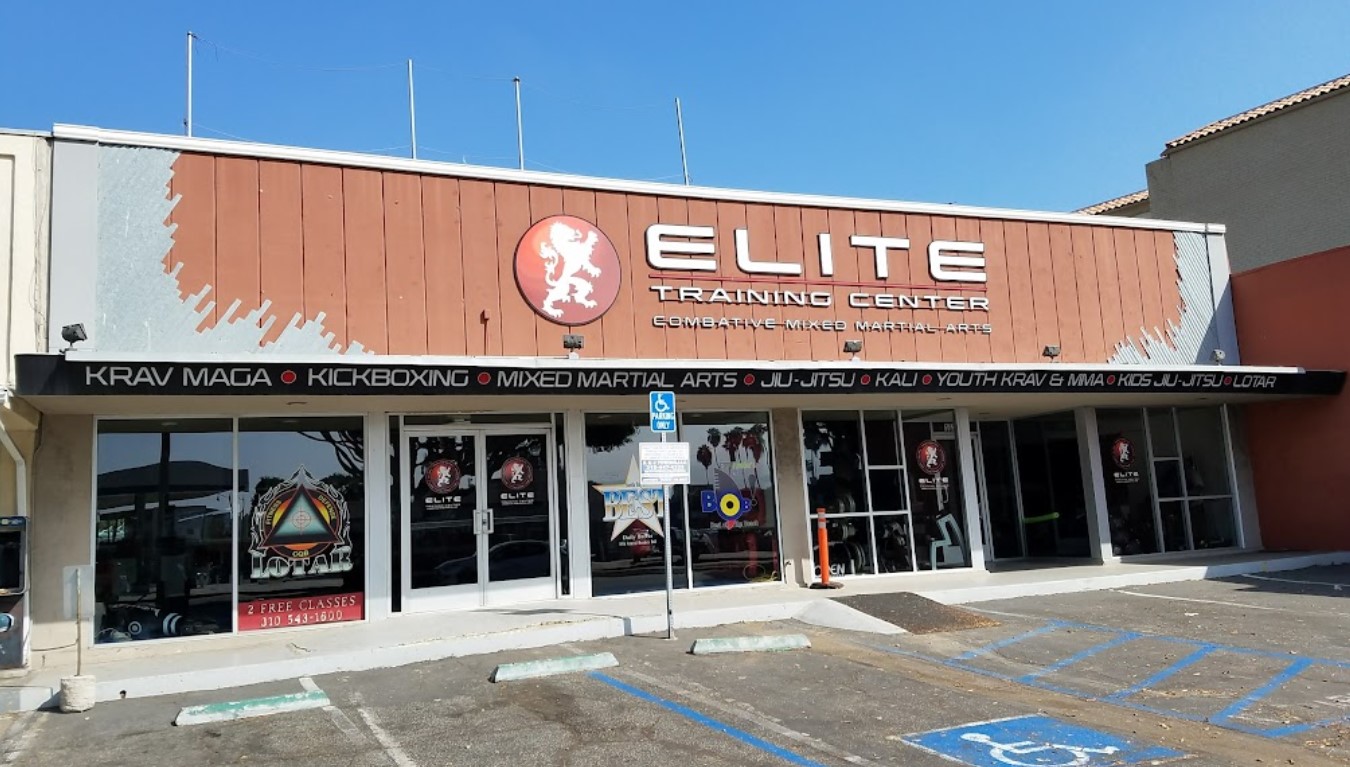
Elite Training Center
1628 South Pacific Coast Highway,
Redondo Beach, CA 90277
(310) 543-1600
www.elitetrainingcenter.net