Brazilian Jiu-Jitsu
I am often asked about how to do certain Brazilian Jiu-Jitsu Techniques for Self-Defense. How do you get out of this hold or this headlock? I always smile because I know that it is important to learn full Martial Arts System so a person always has something to fall back on if the single self-defense is flawed or the attacker changes to a different techniques. It make clear sense to me. If you start off in a headlock and do the Brazilian Jiu-Jitsu escapes; but, something happens where you end of on the ground, you better know how to defend yourself on the ground: Learn Brazilian Jiu-Jitsu!
Next it is important understand once you begin learning a Martial Arts system or style, you should realize the before a punch is throw or you are attacked, there are many things that you can do before using your physically Martial Arts techniques. Thus, you better learn how to communicate effectively for Self-Defense!
Communication– During this stage of a confrontation it is important to use the best
forms of body language, verbal and non-verbal communication to defuse a second party
so they will “calm down” or relax. Forms of non-verbal and verbal communication occur
when using: 1. Awareness- Having an understanding of the environment and what is around you
such as exits, boundaries, other parties of people and weapons etc. 2. Assessment- Is the “what is happing and what is being said;” during a
confrontation. Assessment skills and strategies cover how a person is saying
something and what does it mean. Eye contract (yet not staring), relaxation,
and breathing (these behaviors are non-verbal) are key techniques to use during
this stage in the confrontation. It is important to listen to the person actively so
you can gather information and setup a rapport to communicate in a less
unpredictable direction and find a point of agreement.
Here your responses will occur in three types of ways:
*Passive Response—For example, “Would you like to step outside man?” No
(saying this under your breathe), I don’t want to fight you. Although this type
response does setup a verbal boundary in saying “NO”, the response showed
fear of being intimated by the question.
*Aggressive Response—For example, “Would you like to step outside man?”
No, we can fight right now and right here. This response will escalate the
situation into unpredictability.
* Assertive Response—For example, “Would you like to step outside man?”
No, but I can see you are angry at the situation. Let us both have a seat to talk
this out. This type of response is the best choice to de-escalate the situation,
and having the person sit down will relax the muscles and his mindset. Plus,
you setup a verbal boundary in saying “NO” to fighting. 3. Action- Performing the best behavior during and after assessing the situation such
as, analyzing how the person is standing and how you are standing to defend a
sucker punch, walking away, or diffusing the situation by using de-escalating
communication or responses. Remember these elements while analyzing the person’s behavior during a confrontation:
1. The person is trying and attempting to intimidate you with body posturing and
voice tones. 2. Watch for facial changes, tone of voice changes and listen to the word choices
being expressed at you. 3. Watch if the person is standing with their shoulders square with no degree of
movement (Meaning, I just wish to talk). 4. Watch if the person is standing on a 45 degree with their shoulders angled
(Meaning, I am nervous and/or ready to sucker-punch you or just ready for you to
hit me etc.) 5. The person is standing in the on-guard position with his feet and shoulders (this is
the classic boxer’s position, or in other words, I wish to fight you.)
The proper way to stand as a jiu-jitsu stylist to defend the sucker punch while
communicating with a second party is as follows:
* Both hands are up in a way that looks as if you are talking and listening with your
hands, but really positioning yourself for a defends against a sucker-punch.
* Both feet are standing normal. Standing square with ones shoulders.
If the punch is thrown at you…
* The punch is thrown, step in and hook both arms with your hands one on each
side, not a block or just blocking one side. Next step to the side bring with one of
his hands under your armpit if you can. This is the Clinch position. A going
objective to reach so you don’t get hit.
My best,
Prof. “little” Tony Pacenski
BJJ Revolution Team
2ndDegree Black Belt
Brazilian Jiu-Jitsu
Other Blogs About Brazilian Jiu-Jitsu
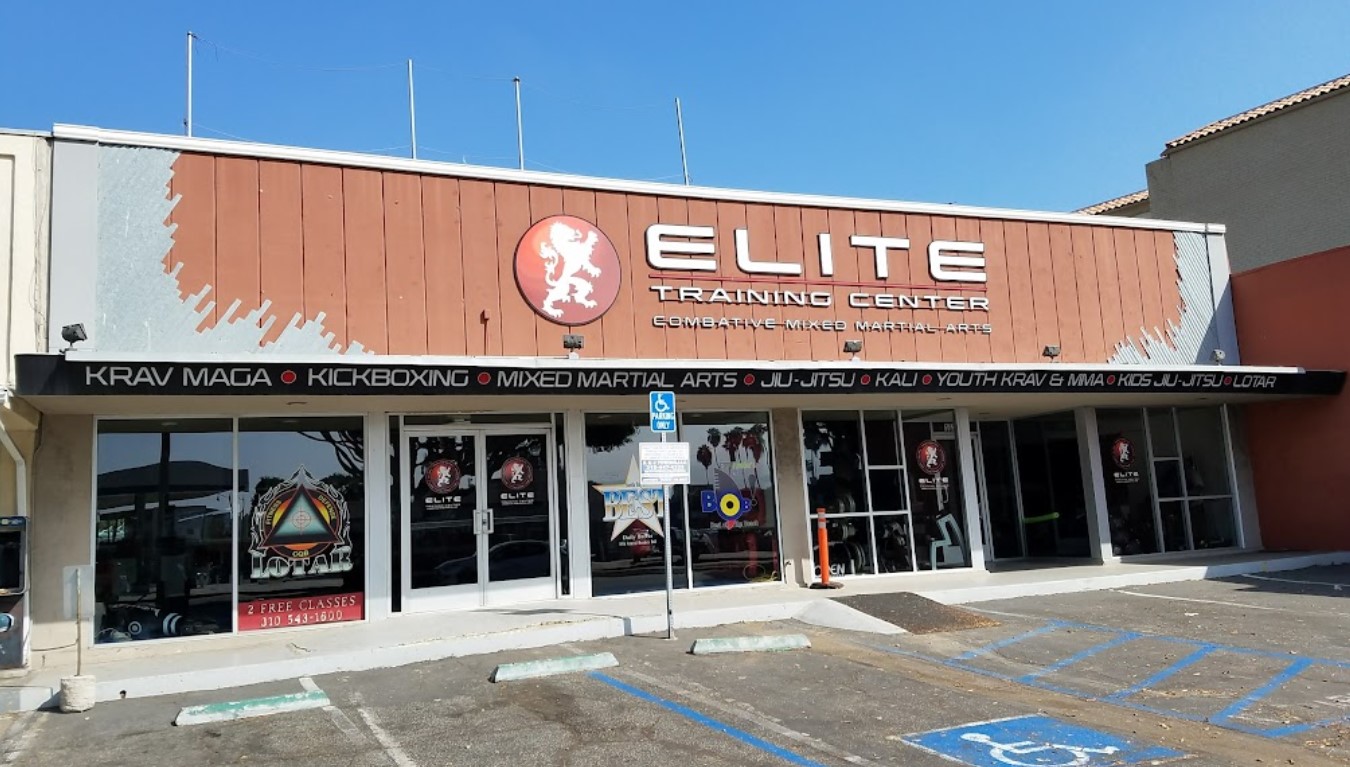
Elite Training Center
1628 South Pacific Coast Highway,
Redondo Beach, CA 90277
(310) 543-1600
www.elitetrainingcenter.net